Author

admin

Browsing

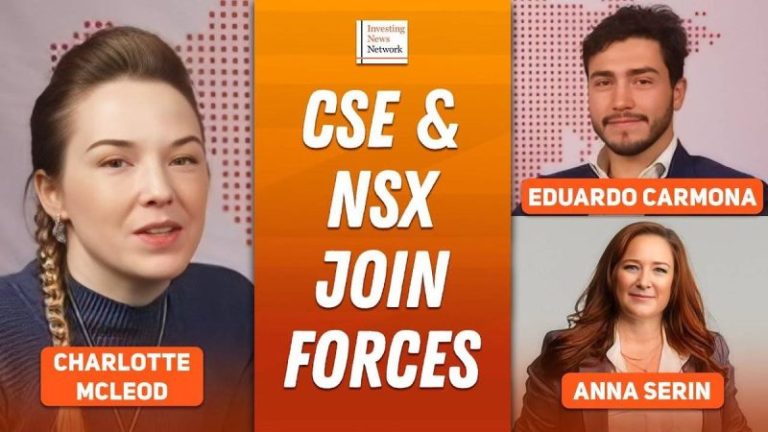
Anna Serin of the Canadian Securities Exchange (CSE) and Eduardo Carmona of the National Stock Exchange of Australia (NSX) discuss the CSE’s recent acquisition of the NSX, outlining what it means for both companies and investors.

‘What we’re hoping to create, and where we think the opportunity lies in Australia, is creating the venture market a little bit like the CSE’s done (in Canada),’ Carmona explained.

Securities Disclosure: I, Charlotte McLeod, hold no direct investment interest in any company mentioned in this article.

This post appeared first on investingnews.com

Proceeds to be used to Accelerate Procurement and Component Assembly for Demonstration Facility Deployment in Iceland

Syntholene Energy CORP. (TSXV: ESAF,OTC:SYNTF) (FSE: 3DD0) (OTCQB: SYNTF) (the ‘Company’ or ‘Syntholene’) announces that it intends to complete a non-brokered private placement of up to $2.0 million (the ‘Financing’).

The Financing is expected to consist of the issuance of units of the Company (the ‘Units’) at a price of $0.45 per Unit, with each Unit comprising one common share of the Company (a ‘Common Share’) and one non-transferable common share purchase warrant (each whole warrant, a ‘Warrant’). Each whole Warrant will entitle the holder to purchase one additional Common Share at an exercise price of $0.63 for a period of two years from the date of issuance, subject to an acceleration provision in accordance with the terms of the Financing.

Gross proceeds from the Financing are expected to be used as follows: up to approximately $1.5 million toward the procurement and assembly of components for the Company’s planned demonstration facility in Iceland, and up to approximately $0.5 million toward corporate marketing initiatives, investor relations and working capital.

The Company expects that insiders of the Company may participate in the Financing. The extent of insider participation, if any, has not been determined at this time. Any insider participation will be disclosed in accordance with the policies of the TSX Venture Exchange and applicable securities laws.

Finder’s fees may be payable in connection with the Financing, subject to compliance with applicable securities laws and the policies of the TSX Venture Exchange.

All securities issued pursuant to the Financing will be subject to a statutory hold period of four months and one day from the date of issuance, in accordance with applicable securities laws. Completion of the Financing remains subject to the receipt of all required regulatory approvals, including approval of the TSX Venture Exchange.

The securities offered pursuant to the Financing have not been and will not be registered under the United States Securities Act of 1933, as amended, and may not be offered or sold in the United States absent registration or an applicable exemption from the registration requirements. This news release does not constitute an offer to sell or a solicitation of an offer to buy securities in any jurisdiction in which such offer, solicitation or sale would be unlawful.

About Syntholene

Syntholene is actively commercializing its novel Hybrid Thermal Production System for low-cost clean fuel synthesis. The target output is ultrapure synthetic jet fuel, manufactured at 70% lower cost than the nearest competing technology today. The company’s mission is to deliver the world’s first truly high-performance, low-cost, and carbon-neutral synthetic fuel at an industrial scale, unlocking the potential to produce clean synthetic fuel at lower cost than fossil fuels, for the first time.

Syntholene’s power-to-liquid strategy harnesses thermal energy to power proprietary integrations of hydrogen production and fuel synthesis. Syntholene has secured 20MW of dedicated energy to support the Company’s upcoming demonstration facility and commercial scale-up.

Founded by experienced operators across advanced energy infrastructure, nuclear technology, low-emissions steel refining, process engineering, and capital markets, Syntholene aims to be the first team to deliver a scalable modular production platform for cost-competitive synthetic fuel, thus accelerating the commercialization of carbon-neutral eFuels across global markets.

For further information, please contact:
Dan Sutton, CEO
comms@syntholene.com
www.syntholene.com
+1 608-305-4835

Investor Relations
KIN Communications Inc.
604-684-6730
ESAF@kincommunications.com

Neither TSX Venture Exchange nor its Regulation Services Provider (as that term is defined in policies of the TSX Venture Exchange) accepts responsibility for the adequacy or accuracy of this release.

Forward-Looking Statements
This press release contains forward-looking statements within the meaning of applicable securities laws. The use of any of the words ‘expect’, ‘anticipate’, ‘aims’, ‘continue’, ‘estimate’, ‘objective’, ‘may’, ‘will’, ‘project’, ‘should’, ‘believe’, ‘plans’, ‘intends’ and similar expressions are intended to identify forward-looking information or statements. All statements, other than statements of historical fact, including but not limited to statements regarding the completion of the Financing, the proposed use of proceeds of the Financing, TSXV approval, development of the test facility, commercial scalability, technical and economic viability, anticipated geothermal power availability, anticipated benefit of eFuel, and future commercial opportunities, are forward-looking statements.

The forward-looking statements and information are based on certain key expectations and assumptions made by the Company, including without limitation the assumption that the Company will be able to complete the Financing on the proposed terms or at all, that the TSXV will approve the Financing, the Company will be able to execute its business plan, including that it will use the Proceeds of the Financing, if any, as described herein, that the Company will be able to advance its planned test facility, that the eFuel will have its expected benefits, that there will be market adoption, and that the Company will be able to access financing as needed to fund its business plan. Although the Company believes that the expectations and assumptions on which such forward-looking statements and information are based are reasonable, undue reliance should not be placed on the forward-looking statements and information because the Company can give no assurance that they will prove to be correct. Since forward-looking statements and information address future events and conditions, by their very nature, they involve inherent risks and uncertainties.

The forward-looking statements and information are based on certain key expectations and assumptions made by the Company, including without limitation the assumption that the Company will be able to execute its business plan, that the eFuel will have its expected benefits, that there will be market adoption, and that the Company will be able to access financing as needed to fund its business plan. Although the Company believes that the expectations and assumptions on which such forward-looking statements and information are based are reasonable, undue reliance should not be placed on the forward-looking statements and information because the Company can give no assurance that they will prove to be correct. Since forward-looking statements and information address future events and conditions, by their very nature, they involve inherent risks and uncertainties.

Actual results could differ materially from those currently anticipated due to a number of factors and risks, including, without limitation, Syntholene’s ability to meet production targets, realize projected economic benefits, overcome technical challenges, secure financing, maintain regulatory compliance, manage geopolitical risks, and successfully negotiate definitive terms. Syntholene does not undertake any obligation to update or revise these forward-looking statements, except as required by applicable securities laws.

Readers are advised to exercise caution and not to place undue reliance on these forward-looking statements.

NOT FOR DISSEMINATION IN THE UNITED STATES OR THROUGH U.S. NEWSWIRE SERVICES

To view the source version of this press release, please visit https://www.newsfilecorp.com/release/282924

News Provided by TMX Newsfile via QuoteMedia

This post appeared first on investingnews.com

Mr. Thordarson brings two decades of expertise in operations, infrastructure development, and large-scale business transformation in the aviation industry

Syntholene Energy Corp. (TSXV: ESAF,OTC:SYNTF) (OTCQB: SYNTF) (FSE: 3DD0) (‘Syntholene’ or the ‘Company’) announces the nomination of Jens Thordarson, former Chief Operating Officer of Icelandair, to its Advisory Board. With nearly two decades of leadership experience in the aviation industry, Mr. Thordarson brings expertise in operations, infrastructure development, and large-scale business transformation, critical elements as Syntholene advances its synthetic fuel solutions for global transportation and logistics.

Mr. Thordarson held multiple executive roles at Icelandair over his 17-year tenure, including Chief Operating Officer and Vice President of Technical Operations. In these roles, he spearheaded large-scale operational improvements, optimized fleet management, and integrated advanced technologies to enhance efficiency and sustainability in one of the world’s most demanding industries. Currently, he serves as CEO of GeoSalmo, a company focused on sustainable aquaculture, further reinforcing his commitment to innovative and environmentally responsible industries. Mr. Thordarson also serves as the Honorary Consul of Ireland in Iceland, encouraging tourism, trade, and foreign affairs between the two nations.

‘Jens’ leadership in aviation and operations, combined with his strategic network in the nation of Iceland, makes him an ideal contributor to Syntholene’s Advisory Board,’ said Dan Sutton, Chief Executive Officer of Syntholene Energy Corp. ‘As we work to bring sustainable synthetic fuels to Icelandic and European markets, his insights into politics, regulatory landscape, and infrastructure readiness will be instrumental in driving our commercialization strategy.’

Syntholene Energy Corp. is at the forefront of developing sustainable synthetic fuels designed to seamlessly integrate with existing energy infrastructure while significantly reducing carbon emissions. The nomination of Mr. Thordarson reinforces the Company’s commitment to drawing expertise from industries where fuel efficiency, innovation, and operational scale are paramount.

‘I am excited to join Syntholene’s Advisory Board and contribute my experience in aviation, operations, and strategic growth,’ said Mr. Thordarson. ‘The transition to sustainable fuels is essential for industries like aviation, and Syntholene’s technology represents a major step forward, taking a fundamentally different and more disciplined approach to the challenge. I look forward to working with the team as they move toward scale.’

About Syntholene

Syntholene is actively commercializing its novel Hybrid Thermal Production System for low-cost clean fuel synthesis. The target output is ultrapure synthetic jet fuel, manufactured at 70% lower cost than the nearest competing technology today. The company’s mission is to deliver the world’s first truly high-performance, low-cost, and carbon-neutral synthetic fuel at an industrial scale, unlocking the potential to produce clean synthetic fuel at lower cost than fossil fuels, for the first time.

Syntholene’s power-to-liquid strategy harnesses thermal energy to power proprietary integrations of hydrogen production and fuel synthesis. Syntholene has secured 20MW of dedicated energy to support the Company’s upcoming demonstration facility and commercial scale-up.

Founded by experienced operators across advanced energy infrastructure, nuclear technology, low-emissions steel refining, process engineering, and capital markets, Syntholene aims to be the first team to deliver a scalable modular production platform for cost-competitive synthetic fuel, thus accelerating the commercialization of carbon-neutral eFuels across global markets.

For further information, please contact:
Dan Sutton, CEO
comms@syntholene.com
www.syntholene.com

Investor Relations
KIN Communications Inc.
604-684-6730
ESAF@kincommunications.com

Forward-Looking Statements
This press release contains forward-looking statements within the meaning of applicable securities laws. The use of any of the words ‘expect’, ‘anticipate’, ‘aims’, ‘continue’, ‘estimate’, ‘objective’, ‘may’, ‘will’, ‘project’, ‘should’, ‘believe’, ‘plans’, ‘intends’ and similar expressions are intended to identify forward-looking information or statements. All statements, other than statements of historical fact, including but not limited to statements regarding the completion of the definitive agreement, successful implementation of the test facility, commercial scalability, technical and economic viability, anticipated geothermal power availability, anticipated benefit of eFuel, and future commercial opportunities, are forward-looking statements.

The forward-looking statements and information are based on certain key expectations and assumptions made by the Company, including without limitation the assumption that the Company will be able to execute its business plan, that the eFuel will have its expected benefits, that there will be market adoption, and that the Company will be able to access financing as needed to fund its business plan. Although the Company believes that the expectations and assumptions on which such forward-looking statements and information are based are reasonable, undue reliance should not be placed on the forward-looking statements and information because the Company can give no assurance that they will prove to be correct. Since forward-looking statements and information address future events and conditions, by their very nature, they involve inherent risks and uncertainties.

Actual results could differ materially from those currently anticipated due to a number of factors and risks, including, without limitation, Syntholene’s ability to meet production targets, realize projected economic benefits, overcome technical challenges, secure financing, maintain regulatory compliance, manage geopolitical risks, and successfully negotiate definitive terms. Syntholene does not undertake any obligation to update or revise these forward-looking statements, except as required by applicable securities laws.

Readers are advised to exercise caution and not to place undue reliance on these forward-looking statements.

To view the source version of this press release, please visit https://www.newsfilecorp.com/release/282796

News Provided by TMX Newsfile via QuoteMedia

This post appeared first on investingnews.com

Survey also validates significant mineralization and unlocks new targets

Highlights

  • Direct correlation with mineralization : The modeled geophysical plates explain the presence of semi-massive to massive sulfides intersected in holes TOM-25-009 to TOM-25-015.
  • Priority target BER-14C : Identification of a major 160 x 300 m plate, open at depth and to the northeast , suggesting the presence of a significant massive sulfide lens near drill hole TOM-25-014.
  • Confirmation of Berrigan Deep : The TOM-25-015 drill hole perfectly intersects the southeast extension of the BER-14C plate, validating the continuity of the mineralized system at a depth of over 450 metres .

TomaGold Corporation (TSXV: LOT,OTC:TOGOF; OTCPK: TOGOF) (‘ TomaGold ‘ or the ‘ Company ‘) is pleased to announce the interpretation results of the borehole electromagnetic (BHEM) survey completed on its Berrigan Mine project, located in the Chibougamau mining camp.

This press release features multimedia. View the full release here: https://www.businesswire.com/news/home/20260205830419/en/

Figure 1: TomaGold’s borehole EM survey confirms Berrigan Deep Zone

The survey, conducted by Abitibi Geophysics, modeled ten conductive plates of varying orientation and size that not only corroborate the high-grade intersections already announced, but also indicate significant extension potential, particularly with the discovery of the Berrigan Deep zone.

David Grondin, President and CEO of TomaGold, stated: ‘The geophysics confirm what our drill cores indicated: Berrigan Mine sits on a large-scale mineralized system. The BER-14C plate, in particular, extends the mineralization signature of holes TOM-25-014 and TOM-25-015 with a vector pointing to an even more conductive zone to the northeast.’

Technical analysis of the plates

The survey uses Terrascope PRO5U transmitters (up to 15 kW) powered by a Wildcat generator to transmit a bipolar signal in a 530 x 560 m surface loop with a current of 30 A. The borehole measurements are taken at frequencies of 5 Hz and 1 Hz using a GPS-synchronized DigiAtlantis triaxial probe, which captures the components of the magnetic field. Finally, the data is processed and modeled using specialized Maxwell and Oasis Montaj software, with the conductive plates shown in green in Figure 1.

Table 1: Comparative analyses Drilling/BHEM

Sector / Drill hole

Intersection (base interval)

Geophysical plate

Conductance (S)

Plate dimensions (m)

Berrigan Deep (TOM-25-015)

1.98% Zn, 0.82 Au g/t and 3.21 Ag g/t over 98.50 m

BER-14C

5000

160×300

West Extension (TOM-25-014)

4.55% Zn, 4.94 Au g/t and 56.44 Ag g/t over 2.10 m

TOM-25-014_B

5000

85×90

Main Zone (TOM-25-009)

1.40% Zn, 1.12 Au g/t and 7.55 Ag g/t over 48.05 m

TOM-25-009_C

4000

40×40

North Zone (TOM-25-012/13)

Results pending

TOM-25-12+13_A

1900

70×220

Source: Rapport technique d’Abitibi Géophysique (25QC084-BT TomaGold, Berrigan, BHEM, 2026)

Note: TomaGold has reverted to reporting elemental assay results rather than metal equivalent grades. The mineralization style encountered at Berrigan Mine differs from typical sulphide deposits in the surrounding area, including Scott Lake, Lemoine and Mattagami, as well as outside the immediate region such as Normétal, Rouyn-Noranda and Timmins. As a result, metallurgical recovery assumptions remain uncertain at this stage and cannot currently support the use of metal equivalent calculations.

Next Steps

TomaGold plans to:

  1. Drill three new holes (TOM-26-016 to TOM-26-018) to test the northeast and depth extensions of the BER-14C conductive plate.
  2. Conduct additional follow-up drilling to extend holes TOM-25-010, 011, and 013 with the goal of reaching modeled targets, and drill a corner hole from hole TOM-25-015.
  3. Conduct a low-frequency surface electromagnetic (EM) survey to better define the thickness, continuity, and lateral extent of the mineralized system.

About the Berrigan Mine Project
The Berrigan Mine property consists of 16 claims totalling 483 hectares located 4 km north-northwest of the town of Chibougamau. TomaGold has an option to acquire 100% of the property from Chibougamau Independent Mines Inc.

The property has been the subject of more than one historical estimate. Met-Chem Canada Inc. prepared the most recent of these in April 2001 in a report titled: ‘Pre-feasibility study: Etude Conceptuelle, Projects Berrigan and Tortigny’ by Chuinard et al. In the report, a resource estimate completed using polygonal estimation techniques stated 1.39 Mt grading 3.17% Zn and 1.77 g/t Au on the main Berrigan Mine zone. No resource classifications were given for the resource (GM61359).

The mineral resource estimate presented above is historical in nature and was not prepared in accordance with National Instrument 43-101 standards. Accordingly, the reader is cautioned not to rely on this estimate, as the Company is not treating the estimate as a current mineral resource. The qualified person has not done sufficient work to make the resource current. Substantial data compilation, verification, and, potentially, additional drilling and resampling would be required by a qualified person before the historical estimate could be classified as a current mineral resource. There can be no assurance that any portion of the historical mineral resource will ultimately be confirmed or demonstrated to be economically viable. For further information regarding the Berrigan Mine Project, please consult the press release dated September 13, 2023 .

Technical Disclosure
The drilling program was managed by Explo-Logik of Val-d’Or, Québec. Drill core was split in half, with one half submitted to AGAT Laboratories at Val-d’Or for analysis. Gold was analyzed by fire assay (50 g) with atomic absorption finish, while base metals were analyzed by four-acid digestion with ICP-OES finish. Samples with gold grades greater than 10 g/t are reprocessed using metallic screening with a 106 µm cutoff. The processed material is split and analyzed by fire assay with ICP-OES finish to extinction. A separate split is prepared to independently analyze mineralized intervals with a target grade greater than 1.00% Cu-Zn using a Na₂O₂ fusion with ICP-OES or ICP-MS finish. Sample preparation duplicates, certified reference standards, and blanks are inserted into the sample stream.

The technical content of this press release has been reviewed and approved by Jean Lafleur, P.Geo., Vice President of Exploration of the Company, and Suzie Tremblay, P.Geo., Vice President of Operations at Explo-Logik Inc. and a consultant to TomaGold, each acting as a Qualified Person under National Instrument 43-101.

About TomaGold
TomaGold Corp. (TSXV: LOT,OTC:TOGOF, OTCPK: TOGOF) is a Canadian junior mining company focused on the acquisition, exploration, and development of high-potential precious and base metal projects, with a primary focus on gold and copper in Québec and Ontario. The Company’s core assets are located in the Chibougamau Mining Camp in northern Québec, where it owns the Obalski gold-copper-silver project and holds options to acquire 12 additional properties, including the Berrigan Mine, Radar, David, and Dufault projects. TomaGold also holds a 24.5% joint venture interest in the Baird gold property near the Red Lake Mining Camp in Ontario. In addition, the Company has lithium and rare earth element (REE) projects in the James Bay region, strategically positioned near significant recent discoveries.

Follow TomaGold:

WhatsApp: https://www.whatsapp.com/channel/0029Vb79qG6LdQeiiErI1e27
LinkedIn: https://www.linkedin.com/company/tomagold-corporation
Facebook: https://www.facebook.com/TomaGoldCorporation
Instagram: https://www.instagram.com/tomagoldcorp
X: https://x.com/tomagoldcorp

Cautionary Statement on Forward-Looking Information
This news release includes certain statements that may be deemed ‘forward-looking statements’. All statements in this news release, other than statements of historical facts, that address events or developments that the Company expects to occur, are forward-looking statements. Forward-looking statements are statements that are not historical facts and are generally, but not always, identified by the words ‘expects’, ‘plans’, ‘anticipates’, ‘believes’, ‘intends’, ‘estimates’, ‘projects’, ‘potential’ and similar expressions, or that events or conditions ‘will’, ‘would’, ‘may’, ‘could’ or ‘should’ occur. Although the Company believes the expectations expressed in such forward-looking statements are based on reasonable assumptions, such statements are not guarantees of future performance and actual results may differ materially from those in the forward-looking statements. Factors that could cause the actual results to differ materially from those in forward-looking statements include the potential results of exploration and drilling activities, market prices, continued availability of capital and financing, and general economic, market or business conditions. Investors are cautioned that any such statements are not guarantees of future performance and actual results or developments may differ materially from those projected in the forward-looking statements. Forward-looking statements are based on the beliefs, estimates and opinions of the Company’s management on the date the statements are made. Except as required by applicable securities laws, the Company undertakes no obligation to update these forward-looking statements in the event that management’s beliefs, estimates, opinions, or other factors should change.

Neither TSX Venture Exchange nor its Regulations Services Provider (as that term is defined in the policies of the TSX Venture Exchange) accepts responsibility for the adequacy or accuracy of this news release.

View source version on businesswire.com: https://www.businesswire.com/news/home/20260205830419/en/

David Grondin
President and Chief Executive Officer
(514) 583-3490
www.tomagoldcorp.com

News Provided by Business Wire via QuoteMedia

This post appeared first on investingnews.com

Here’s a quick recap of the crypto landscape for Wednesday (February 4) as of 9:00 p.m. UTC.

Get the latest insights on Bitcoin, Ether and altcoins, along with a round-up of key cryptocurrency market news.

Bitcoin and Ether price update

Bitcoin (BTC) was priced at US$73,420.53, down by 3.9 percent over 24 hours.

Bitcoin price performance, February 4, 2026.

Chart via TradingView.

Expectations of tighter monetary policy and unresolved regulatory tensions are also weighing on investors.

Meanwhile, XS.com’s Samer Hasn is observing positive sentiment marked by long-term investors and new Bitcoin addresses accumulating at current low prices, despite speculative money leaving. He views the downtrend as a buying opportunity while the broader market anticipates crucial economic data and earnings from Alphabet (NASDAQ:GOOGL).

Ether (ETH) was priced at US$2,164.80, down by 5.7 percent over the last 24 hours.

Altcoin price update

  • XRP (XRP) was priced at US$1.54, down by 4.7 over 24 hours.
  • Solana (SOL) was trading at US$93.04, down by 7.7 percent over 24 hours.

Today’s crypto news to know

Bitcoin-led selloff wipes nearly US$500 billion from crypto market

A sharp crypto selloff has erased nearly half a trillion dollars in market value in less than a week, with Bitcoin leading the decline, according to a Bloomberg report.

The total market cap for crypto has fallen by about US$467.6 billion since January 29.

Meanwhile, Bitcoin slid to its lowest level since US President Donald Trump’s re-election in early November 2024, briefly touching US$72,877 in US trading before clawing back to around US$75,900.

The pullback comes despite a more crypto-friendly White House and growing institutional adoption, reflecting how fragile sentiment remains after months of heavy leverage.

More than US$700 million in bullish and bearish bets were liquidated in the past 24 hours alone, taking total liquidations since January 29 to over US$6.6 billion, according to CoinGlass data.

Burry warns Bitcoin slide could trigger cascading financial stress

In a Substack post published on Monday (February 2), Michael Burry speculated that Bitcoin’s recent sharp decline could be something beyond a normal bear market, framing it as a uniquely dangerous setup that could trigger cascading financial turmoil across leveraged portfolios, as well as the entire crypto market and metals.

As Bitcoin is deeply embedded into leveraged structures, further price drops could force more selling. He outlined several ‘sickening scenarios,’ including 15 to 20 percent hits for large institutional holders like Strategy (NASDAQ:MSTR), a company he predicts could see major losses if Bitcoin were to fall to US$60,000.

If the cryptocurrency were to dip toward US$50,000, Burry said miners could dump reserves to avoid bankruptcy, dragging minerals and tokenized metal futures into a collapse. Burry sees Bitcoin as a purely speculative asset that has failed to act as a reliable debasement hedge like gold, so its drawdown exposes broader balance sheet fragility driven not just by price moves, but also by over‑levered positions, aggressive artificial intelligence and cloud CAPEX accounting and weak capital discipline that will only become apparent when liquidity tightens.

Strategy’s Bitcoin bet goes underwater

Michael Saylor doubled down on his Bitcoin conviction this week even as Strategy’s vast holdings slipped below their average purchase price. Bitcoin’s drop under roughly US$76,000 has pushed the firm’s estimated cost basis into negative territory, leaving it about US$630 million underwater on paper, according to market estimates cited by critics.

The company has accumulated more than 712,000 BTC since 2020 using a mix of share issuance and convertible debt, a strategy that paid off during the bull market, but now faces renewed scrutiny.

Bitcoin critics, including Peter Schiff, argue that Strategy’s aggressive buying helped fuel the earlier rally and that slowing purchases are now exacerbating the decline. Saylor has rejected that view, posting on X that volatility is “Satoshi’s gift to the faithful” and reiterating his rule to “Buy Bitcoin.”

TRM Labs hits US$1 billion valuation

Blockchain intelligence firm TRM Labs has reached a US$1 billion valuation after closing a US$70 million Series C funding round that was led by Blockchain Capital and included backing from Goldman Sachs (NYSE:GS), Bessemer Venture Partners, Brevan Howard, Thoma Bravo and Citi Ventures.

Co-founder Esteban Castaño said the company was built around the belief that widespread crypto adoption would inevitably require sophisticated risk and compliance tools.

TRM gained traction with law enforcement agencies and financial institutions by tracking activity across multiple blockchains, an early strategic choice that helped it compete with more established rivals.

Bessent reasserts government Bitcoin stance

During testimony before the House Financial Services Committee during a mandatory oversight hearing on the annual report of the Financial Stability Oversight Council, US Secretary of the Treasury Scott Bessent reasserted his stance that Bitcoin is an asset of the US government, not a liability, and that the Strategic Bitcoin Reserve built from forfeited coins is a legitimate balance sheet asset that the treasury is treating as part of the nation’s financial toolkit.

Bessent noted that roughly US$500 million in seized Bitcoin retained by the government has appreciated to over US$15 billion while in custody, underscoring Bitcoin’s role as a high‑growth strategic asset on the federal balance sheet.

He reiterated that the US is not planning to buy more Bitcoin on the open market, but will continue to accumulate it in budget‑neutral ways to build the reserve, such as through forfeitures and seizures.

Securities Disclosure: I, Meagen Seatter, hold no direct investment interest in any company mentioned in this article.

Securities Disclosure: I, Giann Liguid, hold no direct investment interest in any company mentioned in this article.

This post appeared first on investingnews.com
For at least two decades, former Amazon executive Dave Clark ended his work week the same way: a standing Friday date night with his wife, Leigh Anne.

Over dinner, the Clarks would talk through the “peak and pit” of their weeks. The ritual often revolved around Amazon, where Clark played a central role in building the logistics infrastructure that helped launch the e-commerce era.

During those years, Leigh Anne was a sounding board for her husband. In the process, she had a front-row seat to Amazon’s growth from what she called “a baby to a behemoth.”

By the time Clark left Amazon in 2022, he was CEO of the Worldwide Consumer division and one of billionaire founder Jeff Bezos’ top lieutenants.

Dave Clark at Auger headquarters Monday.David Jaewon Oh for NBC News

But these days, Fridays for the Clarks look very different.

Their dinner date has morphed into afternoon cocktails — a bourbon with Diet Coke for her and a Manhattan for him. And the conversation isn’t focused on Amazon anymore. It’s about Auger, the supply-chain startup they run together.

In their first joint interview from Auger’s Seattle office, the Clarks described how their marriage and complementary skill sets are shaping the company.

“We’ve been together for so long that we kind of just read each other’s minds,” Leigh Anne said. Working together, she said, “felt like a natural fit.”

This post appeared first on NBC NEWS

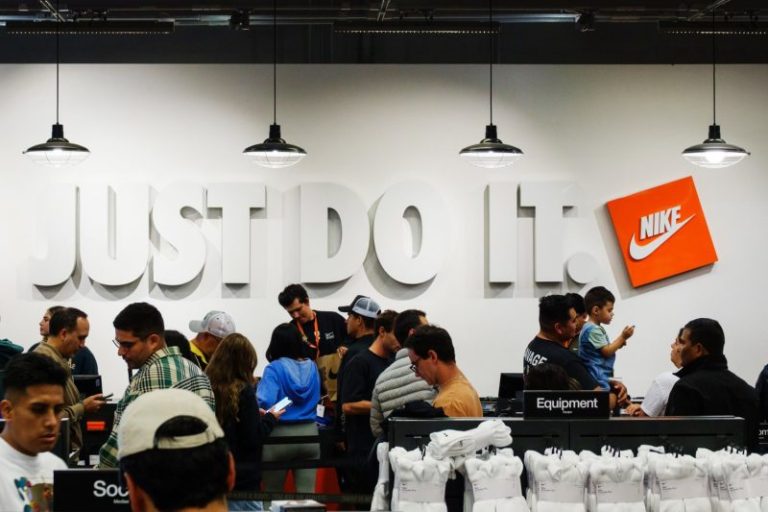
The U.S. Equal Employment Opportunity Commission said Wednesday that it is investigating Nike for allegedly discriminating against white workers.

The agency that polices discrimination in the workplace filed an action in federal court in Missouri to compel the publicly traded athletic shoe and apparel giant to produce information in response to a subpoena the agency served on the company last fall, according to court filings reviewed by NBC News.

The EEOC said it was investigating allegations that the company’s mentorship and training programs and its personnel decisions gave nonwhite employees preferential treatment that amounts, according to the agency, to discrimination against white workers.

Nike is the world’s largest sportswear and apparel company, with nearly 80,000 employees and revenues of around $51.4 billion in 2024.

The allegations were not made by workers at Nike who believed they had been the targets of unfair treatment, however, as is typically the case in EEOC investigations.

Instead, the court filings show that this case stems from a commissioner’s charge brought by then-commissioner Andrea Lucas herself in May 2024, and based on publicly available information such as Nike’s own annual “Impact Reports” and information on its public website.

The EEOC’s request that a judge enforce the subpoena is the latest instance of the Trump administration using a federal agency that is typically charged with preventing and responding to discrimination against nonwhite Americans, and deploying it instead to protect what it says are the underrepresented interests of white people.

Nike has objected in court to many of the EEOC’s demands to documents over the last several months, arguing that they are vague, overly broad, and seek information dating back to well before the period in question.

“This feels like a surprising and unusual escalation,” a Nike spokesperson said. “We have had extensive, good-faith participation in an EEOC inquiry into our personnel practices, programs, and decisions and have had ongoing efforts to provide information and engage constructively with the agency.”

The spokesperson added that Nike has shared “thousands of pages of information and detailed written responses” in connection with the agency’s inquiry and said the company is in the “process of providing additional information.” Nike will respond to the agency’s petition, the spokesperson said.

Lucas was appointed chair of the EEOC by President Donald Trump in November 2025 after serving as a commissioner since 2020, when the president nominated Lucas to the agency.

The agency said it filed the subpoena enforcement action after “first attempting to obtain voluntary compliance with its investigative requests.”

This post appeared first on NBC NEWS

Japan announced that it has successfully retrieved mineral-rich seabed sediment from nearly 6,000 meters below the ocean’s surface near the remote island of Minamitorishima.

Officials say the technical milestone could help reduce the country’s dependence on China.

The work was carried out by deep-sea drilling vessel Chikyu, which collected the sediment as part of a government-backed test program aimed at assessing the feasibility of mining rare-earths-bearing mud from the deep ocean.

According to Japan’s Agency for Marine-Earth Science and Technology, Chikyu departed last month for Minamitorishima — about 1,950 kilometers southeast of Tokyo — and arrived at the test site on January 17.

The first batch of sediment was recovered on February 1.

“It is a first step toward industrialization of domestically produced rare earth in Japan,” Prime Minister Sanae Takaichi said in a statement posted on X. “We will make efforts toward achieving resilient supply chains for rare earths and other critical minerals to avoid overdependence on a particular country.”

Rare earths are essential in the high-performance magnets used in electric vehicles, wind turbines, electronics and defense systems. China currently dominates global production and processing of heavy rare earths, giving Beijing significant influence over prices and supply, a vulnerability that has increasingly worried world governments.

Japan’s latest test comes amid heightened geopolitical tension in the region.

Tokyo has grown more concerned about potential supply disruptions after China recently suspended exports of certain dual-use goods to Japan. While rare earths were not explicitly named, the move raised fears that Beijing could use its control over critical minerals as leverage as it has in the past.

Japanese researchers first identified rare-earth-rich mud deposits around Minamitorishima in the 2010s. Since then, the government has funded research, development and feasibility studies under its Strategic Innovation Promotion Program, focusing on whether those resources could support a domestic supply chain.

The current trial is designed to test not only the ability to retrieve sediment from extreme depths, but also the logistics of deep-sea mining. Officials cautioned that the work is still at an early stage. Details such as the concentration of rare earth elements in the retrieved mud and the overall recovery rates are still being analyzed. Moving toward commercial production would require demonstrating the entire process, from seabed extraction to separation and refining.

Japan plans to continue testing through mid-February. If the trials are successful, larger-scale demonstrations could follow, potentially including the construction of a dedicated processing facility on Minamitorishima later this decade.

US targets rare earths security with Project Vault

While Japan pushes deeper into rare earths supply diversification, developments in the US underscore how deeply critical minerals policies are shaping markets on both sides of the Pacific.

On Monday (February 2), the Trump administration rolled out Project Vault, a roughly US$12 billion strategic critical minerals reserve aimed at reducing US dependence on China for rare earths and other essential metals.

The initiative, anchored by a US$10 billion loan from the US Export‑Import Bank and about US$2 billion in private capital, is designed to stockpile strategic materials like rare earths, cobalt and lithium.

The program’s backers say the reserve will function much like America’s Strategic Petroleum Reserve, offering a buffer against global supply disruptions and insulating manufacturers from price shocks that have plagued markets during recent US-China trade tensions. Analysts say the effort signals an ongoing shift toward industrial policy that treats critical minerals as strategic assets, even as completion details and long‑term execution remain uncertain.

The financial markets responded quickly. Shares of Australian rare earths producer Lynas Rare Earths (ASX:LYC,OTCQX:LYSDY) rallied more than 3 percent on Tuesday (February 3), closing at AU$15.25, reflecting renewed investor interest tied to the policy news and the broader rare earth narrative.

Lynas’ recent movements come against a backdrop of broader gains in non‑Chinese mineral producers, as investors reposition around supply chain security and government policy support.

Rare earths stocks more generally saw upticks in the US market after the country’s critical minerals plan came into focus, with producers like MP Materials (NYSE:MP) and USA Rare Earth (NASDAQ:USAR) gaining on reports of increased government engagement in critical mineral sourcing.

Securities Disclosure: I, Giann Liguid, hold no direct investment interest in any company mentioned in this article.

This post appeared first on investingnews.com

Elon Musk’s Neuralink has captured the public’s attention and imagination with its futuristic vision of connecting the human brain to computers.

Neuralink has drawn interest to the brain computer interface (BCI) sector with its N1 implant, which is undergoing human trials in patients with spinal cord injuries (SCIs) and ALS.

Musk’s company is far from the only one developing BCI tech to assist users with conditions such as SCIs, ALS and neurological disorders.

‘The number of new firms entering the space and the amount of venture funding being distributed to startups surpasses any other product category we have seen in the 25 years we have been covering the neurotechnology industry,’ Neurotech Reports stated in June 2025.

As Neuralink continues to make strides, investors are wondering how to get a piece of the action by investing in the neurotechnology venture.

Because it is privately held, Neuralink stock isn’t accessible to the average person — but that doesn’t mean it’s impossible to get exposure to this future-looking medical research company. Read on to learn how to participate in the growth of this exciting business, and other BCI firms you can invest in.

In this article

    What is Neuralink?

    Neuralink is a neurotechnology startup that was founded in 2016 by Tesla (NASDAQ:TSLA) CEO Musk and a team of eight scientists and engineers in 2016.

    It was first reported on in 2017, and two years later, in June 2019, the company held and streamed its public launch event to showcase the technology it is developing: an innovative brain-computer interface.

    Instead of using traditional electrodes, which, according to a company whitepaper, can be bulky and damaging to brain tissue, Neuralink’s BCI uses “ultra-thin threads” that are implanted into the brain using a robotic device that resembles a sewing machine. Once implanted, the electrodes develop a BCI, stimulating the brain and monitoring activity, and the threads connect to a custom-designed chip that can read data from groups of neurons.

    Musk announced the coin-sized Telepathy chip, with over 1,000 electrodes 20 times finer than hair, in January 2024.

    Potential uses of BCI technology include helping paralyzed individuals regain control of their limbs and restoring vision. Musk told his audience during Neuralink’s 2019 launch event that this technology could have a wide range of applications in medicine, such as restoring sensory and motor function in people with spinal cord injuries or neurological disorders. Additionally, an early goal of development is translating neuron signals into computer commands, which would allow humans to control devices like computers and smartphones with their brainwaves.

    Musk has claimed that BCI could even facilitate direct communication between humans and machines, although some members of the neuroscientific community are skeptical.

    Other experts have suggested that Neuralink’s work is not necessarily novel, as Dr. Jason Shepherd, an associate professor of neurobiology at the University of Utah, told Business Insider in 2020. “All the technology that he showed has been already developed in some way or form,’ he said. ‘Essentially, what they’ve done is just package it into a nice little form that then sends data wirelessly.”

    Other experts in the field have ethical concerns about how Neuralink is conducting its clinical trials and the broader implications of disregarding established standards.

    “If you decide to play with fire in a house, you increase the risk threshold not only of yourself but of the whole house,” Marcello Ienca, a professor of ethics of AI and neuroscience at Technical University of Munich, told Forbes in 2024. “My fear is that Neuralink’s disregard for the ethical aspects of their technology may cause a backfire effect for the entire neurotechnology community.”

    How much is Neuralink worth?

    Neuralink was valued at around US$9.7 billion as of June 2025, but as a privately held business, much of its financial information is kept under wraps. That said, US Securities and Exchange Commission (SEC) documents containing information about its funding rounds provide some insight.

    The earliest came in 2017, when the company raised US$27 million out of a planned US$100 million in a Series A funding round. In April 2019, SEC filings show the company acquired US$39 million out of a planned US$51 million in a Series B funding round. A limited amount of information has been made available to the public, and the identities of the investors have not been publicly disclosed. However, some news outlets have speculated that funding could have come from a combination of venture capitalists, or from Musk himself and the Neuralink team.

    In 2021, Neuralink received what was then its largest amount of money to date, raising US$205 million in a funding round led by tech investment firm Vy Capital. Other participants included Google Ventures, the venture capital arm of Alphabet (NASDAQ:GOOGL); OpenAI CEO Sam Altman; Fred Ehrsam, co-founder of Paradigm and Coinbase Global (NASDAQ:COIN); and Ken Howery, co-founder of PayPal Holdings (NASDAQ:PYPL) and Founders Fund.

    In May 2023, as Neuralink faced public backlash over accusations of animal mistreatment, it received clearance from the US Food and Drug Administration (FDA) to run the first human trial of its brain implant. Just months later, in August, Neuralink closed a US$280 million funding round led by Founders Fund. The filing was amended in November 2023 to reflect an additional US$43 million, bringing the total to US$323 million.

    Most recently, the company announced the closure of a US$650 million Series E funding round in June 2025.

    Is Neuralink approved for human trials?

    In May 2023, Neuralink received clearance from the US Food and Drug Administration (FDA) to run the first human trials of its brain implant. The company opened a patient registry in early 2023 that allowed people who had at least one of a qualifying list of conditions to volunteer for upcoming clinical trials. It is also approved for human trials in Canada, Great Britain and the UAE.

    The first US study, dubbed PRIME — Precise Robotically Implanted Brain-Computer Interface — is specifically focused on patients with cervical spinal cord injuries or amyotrophic lateral sclerosis (ALS). It has an estimated primary completion date of January 2026 and is estimated to be fully completed by January 2031.

    The study’s first participant, a patient with quadriplegia, received the implant on January 28, 2024; Musk reported a quick recovery and ‘promising neuron spike detection’ the following day.

    A month later, Musk said the patient, who is named Noland Arbaugh, could control a cursor mentally. Arbaugh shared 100-day positives in May 2024, calling it a success over prior tech. One of the largest benefits is that it allows him to operate his computer and other devices lying down, while he needed assistance for setup and repositioning with prior devices. He explained that the change gives him more freedom to live on his own time.

    The study’s next two participants were a patient who became paralyzed following a spinal cord injury from a diving accident and another who lost use of his limbs to ALS. The company issued an update on their progress in February 2025, with all three patients touting positive changes following the procedure.

    As of January 2026, Neuralink has now implanted devices in 21 trial participants across the US, Canada, the UK and the UAE.

    The UAE-PRIME trial began recruiting in May 2025 via the Cleveland Clinic Abu Dhabi, while the GB-PRIME study launched in Great Britain two months later.

    Neuralink is also conducting the CONVOY study in the US, announced in November 2024, testing the use of the implant to control an investigational assistive robotic arm. It is open to participants of the PRIME study.

    Meanwhile, the company received FDA breakthrough device designation for Blindsight, a capability being developed to generate visual perception by activating brain areas responsible for visual function, as well as for its speech restoration technology, in 2024 and 2025, respectively. Blindsight trials aimed at restoring vision for the blind are reportedly planned to begin soon in the UAE.

    Looking ahead, Musk says the company will begin high-volume chip production in 2026. In a January update, Neuralink shared plans to improve the implant, including raising electrodes from 1,000 to 3,000. It is also investigating a change to the surgical procedure that would reduce invasiveness by inserting the implant’s threads through the dura mater, the brain’s tough outer membrane.

    How to invest in Neuralink?

    With Neuralink continuing to move forward, how can investors get a piece of this up-and-coming technology?

    The firm has yet to go public, so purchasing Neuralink stock is not an option for many investors. However, there are still ways for investors to potentially profit from Neuralink’s growth before it goes public.

    The vast majority of Neuralink’s funding has come from venture capitalists and a handful of billion-dollar companies. Investors can gain indirect exposure to Neuralink before its IPO by buying publicly traded companies that have invested in the company. This includes Alphabet (NASDAQ:GOOGL), which has funded Neuralink via its subsidiary Google Ventures. This strategy captures potential upside from Neuralink’s growth.

    Those who qualify as accredited investors could also potentially invest in a Neuralink funding round. According to the SEC, an accredited investor must have a net worth of at least US$1 million, not including the value of their primary residence, or an annual income of at least US$200,000 for individuals and US$300,000 for married couples. There must also be a reasonable expectation of the same level of income in the year of filing.

    Individuals can also qualify as accredited investors if they are investment professionals in good standing. In that case, the SEC’s guidelines indicate that they need to hold either a general securities representative license, an investment advisor representative license or a private securities offerings representative license.

    Entities like banks, insurance companies or investment firms with total assets of at least US$5 million may also qualify as accredited investors. Certain types of entities, such as private business companies and small business investment companies, may be exempt from the standard asset value requirements for accredited investor status.

    It’s also worth noting that Neuralink is just one of several companies currently working on developing BCI technology:

      The potential for BCI to impact various industries such as robotics, medicine and biotech has generated a growing amount of interest and excitement. Additionally, heightened interest in the artificial intelligence (AI) sector has led to more research and exploration in related fields, and has attracted increased investment in fields benefiting from AI advancements, including robotics and medicine.

      AI is also being used as a tool to help discover new insights and make moves that might not have been possible without its use. Scientists in California have even developed a brain implant capable of decoding and vocalizing inner speech.

      Finally, one of the simplest ways to gain exposure to Neuralink would be through an exchange-traded fund (ETF) that invests in companies related to BCI technology. While there isn’t an ETF that exclusively focuses on BCIs, there are funds that offer exposure to related themes.

      In the health sector, some options covering similar themes include medical device ETFs and the iShares Healthcare Innovation ETF (LSE:HEAL,OTCPK:BLKIF), a fund that consists of companies that are developing new and innovative healthcare technologies.

      Two other options are the Global X Robotics & Artificial Intelligence ETF (NASDAQ:BOTZ), which includes companies that are involved in the development of robotics and AI, and the ARK Innovation ETF (ARCA:ARKK), which focuses on disruptive technologies across multiple industries, including healthcare and robotics.

      As with any investment decision, it’s important to perform due diligence on available options, including comparing ETFs, to ensure they align with one’s investment goals.

      Securities Disclosure: I, Meagen Seatter, hold no direct investment interest in any company mentioned in this article.

      This post appeared first on investingnews.com